


Key Takeaways
-
Cold calling objections are not just lines SDRs need to overcome. They are signals.
-
A prospect saying “not interested” may mean the account is wrong, the opener is weak, the timing is off, or the rep has not created relevance fast enough.
-
A prospect saying “send me an email” may mean they are busy. It may also mean the phone call failed to earn attention.
-
A prospect saying “we already have a vendor” may not be a dead end. It may be an invitation to compare outcomes.
What are cold calling objections?
Cold calling objections are the concerns, pushbacks, brush-offs, or questions prospects raise during an outbound sales call.
Common examples include:
- “I’m not interested.”
- “Send me an email.”
- “We already have a vendor.”
- “We do this internally.”
- “Now is not a good time.”
- “We do not have budget.”
- “How did you get my number?”
- “I’m not the right person.”
- “Call me next quarter.”
In B2B outbound, cold calling objections usually fall into five categories:
- Relevance objections
The prospect does not understand why the call matters. - Timing objections
The prospect may be a fit, but the issue is not urgent right now. - Authority objections
The person is not the buyer, owner, evaluator, or decision-maker. - Trust objections
The prospect does not trust the source, the reason for outreach, or the rep. - Status quo objections
The prospect already has a vendor, internal process, or workaround.
The SDR’s job is not to “win” every objection. The job is to classify the objection, decide whether the account is worth pursuing, and move the right prospects to a useful next step.
Why cold calling objections have changed
Cold calling used to be treated as a volume game.
More calls. More connects. More pitches. More meetings.
That still creates activity. It does not always create qualified pipeline.
Modern buyers receive cold emails, LinkedIn messages, automated sequences, AI-written notes, retargeting ads, and calls from multiple vendors. They are not just reacting to your call. They are reacting to the entire noise level around their job.
That changes the standard.
A modern cold calling strategy needs:
- Clear ICP targeting
- Relevant account context
- Strong opening language
- Multichannel sequencing
- CRM-backed follow-up
- Fast objection classification
- Clean AE handoff
- SDR coaching from real call data
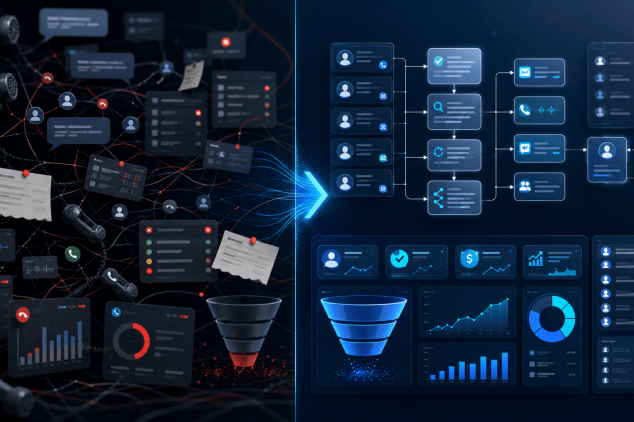
This is why cold calling objections should not be treated as a script problem only. They are often a system problem.
The core principle: objections are diagnostic data
Every objection tells you something.
A good SDR hears the objection and asks:
- Is this account actually in our ICP?
- Is this the right persona?
- Did I create relevance fast enough?
- Is this a real objection or a reflexive brush-off?
- Should this continue by phone, email, LinkedIn, or later follow-up?
- Is this worth an AE’s time?
That mindset is more useful than trying to force every prospect into a meeting.
The goal of cold call objection handling is not to defeat the prospect. The goal is to understand whether there is a real business reason to continue.
The modern objection handling framework
Use this five-step framework.
1. Acknowledge without surrendering
Start by lowering tension.
Examples:
- “Totally fair.”
- “Makes sense.”
- “I hear you.”
- “Appreciate you being direct.”
Do not argue. Do not rush. Do not sound wounded.
Acknowledging the objection is not the same as accepting the end of the conversation.
2. Diagnose the real objection
The first objection is not always the real objection.
Example:
Prospect says:
“Not interested.”
SDR responds:
“Totally fair. Is that because this is not a priority right now, or because you already have something in place?”
That question separates timing from status quo.
Diagnosis prevents lazy rebuttals.
3. Reframe with business relevance
The reframe should connect to the prospect’s role, market context, or likely business problem.
Weak reframe:
“We help companies grow.”
Better reframe:
“The reason I called is that a lot of B2B SaaS teams are increasing outbound activity but still seeing AEs reject meetings because the ICP and qualification standard are loose.”
This works because it names a business issue, not a generic benefit.
4. Ask for a small next step
Do not always jump to a 30-minute demo.
Use lower-friction asks:
- “Worth a quick look, or completely off base?”
- “Would it be unreasonable to compare notes for 10 minutes?”
- “Should I send the specific angle and let you decide?”
- “Is this owned by you, RevOps, or Sales?”
A small next step is often more effective than a hard close.
5. Match the follow-up channel to the objection
Some objections should continue by phone.
Others need email context, LinkedIn validation, a later call, or a referral.
Modern cold call objection handling is channel-aware.
Phone creates live feedback. Email creates context. LinkedIn adds familiarity. CRM tasks preserve timing. A multichannel outbound system uses each channel for a different job.
Cold calling objection map
|
Objection |
What it may mean |
Best response strategy |
Best follow-up |
|
“Not interested” |
No relevance yet, wrong timing, or bad fit |
Diagnose before rebutting |
Short email with specific pain angle |
|
“Send me an email” |
Low trust or low urgency |
Clarify what would be useful |
Email plus scheduled call follow-up |
|
“We already have a vendor” |
Status quo or vendor lock-in |
Create comparison around outcomes |
Email with evaluation criteria |
|
“We do this internally” |
Build vs buy assumption |
Reframe around capacity or coverage |
Email with use cases |
|
“No budget” |
Low priority or no business case |
Explore whether pain exists |
Nurture or disqualify |
|
“Too busy” |
Bad moment or low priority |
Separate today from this quarter |
Calendar-based follow-up |
|
“Not the right person” |
Persona mismatch |
Ask who owns the problem |
Referral email or LinkedIn |
|
“How did you get my number?” |
Trust concern |
Be transparent and respectful |
Opt-out if requested |
|
“Call me next quarter” |
Real timing or polite avoidance |
Ask what changes next quarter |
Trigger-based follow-up |
|
“We are all set” |
Status quo defense |
Ask what “set” means |
Contrast email |
How to handle “I’m not interested”
This is the most common cold calling objection.
It is also one of the easiest to mishandle.
Weak response:
“Can I ask why?”
That often sounds defensive.
Better response:
“Totally fair. When you say not interested, is that because outbound is not a priority right now, or because you already have a team handling it?”
Why this works:
- It acknowledges the objection.
- It gives the prospect easy options.
- It separates timing from fit.
- It keeps the tone calm.
The fix:
Do not try to overpower “not interested.” Classify it.
Possible outcomes:
- Wrong account
- Wrong person
- Wrong timing
- Weak opener
- Real disinterest
- Hidden opportunity
If the prospect is truly not a fit, move on. A good SDR protects capacity.
How to handle “Send me an email”
“Send me an email” is often a polite exit.
But it can also be a valid request for context.
Weak response:
“Sure, I’ll send something over.”
This usually ends the conversation.
Better response:
“Happy to. To make it relevant, should I send something around improving outbound meeting quality, or scaling SDR capacity?”
Why this works:
- It creates a small choice.
- It makes the follow-up more relevant.
- It prevents generic brochure sending.
- It gives the SDR a reason to call again.
Follow-up email template:
Subject: Quick follow-up
Hi [Name],
As promised, sending a short note.
The reason I called is that many B2B teams are increasing outbound activity, but the real issue is often meeting quality, ICP fit, and AE handoff.
Worth comparing notes next week, or not a priority right now?
Best,
[Name]
The email should reflect the call. If it sounds like a generic nurture email, the sequence loses credibility.
How to handle “We already have a vendor”
This objection is common in B2B lead generation, SDR outsourcing, RevOps, SaaS, and sales automation.
It does not always mean the account is closed.
It may mean:
- They are satisfied.
- They are under contract.
- They are dissatisfied but not ready to switch.
- They have not benchmarked outcomes.
- They use a vendor for one channel but not another.
Weak response:
“How is that going?”
That can work, but it is overused.
Better response:
“That makes sense. Most teams we speak with are not starting from zero. The question is usually whether the current motion is producing meetings that AEs actually accept as qualified pipeline.”
Why this works:
- It respects the current vendor.
- It avoids attacking competitors.
- It moves the conversation from vendor presence to vendor performance.
- It introduces a business-quality lens.
Diagnostic question:
“Are you mainly measuring them on meetings booked, or on SQLs and pipeline created?”
That is the right conversation.
How to handle “We do this internally”
This objection appears often when selling outsourced SDR, appointment setting, cold calling support, or outbound strategy.
The prospect may think you are trying to replace their team.
Better response:
“Makes sense. For most teams, the question is not internal versus external. It is whether the internal team has enough capacity to test new segments, run consistent follow-up, and protect AE time.”
Why this works:
- It does not insult the internal team.
- It reframes the issue as capacity and focus.
- It creates use cases beyond replacement.
Follow-up angles:
- New segment testing
- Event follow-up
- Inbound speed-to-lead
- Dormant MQL reactivation
- Dedicated calling support
- Account-based prospecting
- Overflow pipeline generation
How to handle “No budget”
“No budget” usually means one of three things:
- The pain is not urgent.
- The buyer does not own budget.
- The business case has not been made.
Weak response:
“What if we could show ROI?”
Too early.
Better response:
“Understood. Usually when budget is not allocated, it means either the problem is not painful enough yet or the business case has not been made. Which is closer?”
Why this works:
- It respects the objection.
- It identifies whether pain exists.
- It avoids arguing about price.
- It helps qualify the account.
When to disqualify:
If there is no pain, no owner, no urgency, and no budget path, do not force the meeting.
How to handle “Now is not a good time”
This objection has two meanings.
It may mean:
- “I am busy right now.”
- “This is not a priority this quarter.”
Those are very different.
Better response:
“Fair. Is this a bad time today, or is this not a priority this quarter?”
Why this works:
- It separates momentary interruption from strategic timing.
- It gives the prospect an easy answer.
- It improves follow-up accuracy.
If the timing is bad today:
“No problem. Would later this afternoon or tomorrow morning be better?”
If it is not a priority this quarter:
“What would need to change for this to become worth revisiting?”
Now you have trigger-based follow-up.
How to handle “I’m not the right person”
This is useful information.
Do not treat it as a dead end.
Better response:
“Thanks for letting me know. Who usually owns outbound pipeline strategy on your side, Sales, RevOps, or Demand Gen?”
Why this works:
- It narrows the referral path.
- It gives likely departments.
- It makes the ask easier.
- It improves account mapping.
Follow-up:
“Appreciate the pointer. I’ll reach out to [Name] and keep it brief.”
Then update the CRM. Bad routing data should not keep repeating.
How to handle “How did you get my number?”
This is a trust objection.
Be direct. Be respectful.
Better response:
“Fair question. We use business contact data sources and only reach out when there appears to be a relevant B2B reason. If this is not relevant, I’m happy to make sure we do not contact you again.”
Why this works:
- It answers clearly.
- It avoids defensiveness.
- It gives control back to the prospect.
- It protects brand trust.
For teams operating at scale, this should be part of SDR training. Reps need to know your data sourcing, opt-out process, and compliance expectations.
How to handle “Call me next quarter”
This can be real timing. It can also be avoidance.
Better response:
“Happy to. So I do not follow up blindly, what is expected to change next quarter?”
Why this works:
- It tests whether timing is real.
- It uncovers business triggers.
- It improves future relevance.
Possible triggers:
- Budget planning
- Vendor renewal
- New SDR hiring
- New AE headcount
- Territory expansion
- CRM migration
- Board planning
- Pipeline review
Now the next touch is not random.
Why phone and email outreach should work together
Cold calling and email outreach should not operate as separate motions.
A modern outbound sequence uses each channel for its strength.
|
Channel |
Best use |
|
Phone |
Live feedback, objection handling, urgency, human context |
|
|
Written explanation, proof points, recap, forwarding |
|
|
Familiarity, identity validation, light engagement |
|
CRM |
Follow-up discipline, attribution, objection tracking |
|
AE handoff |
Sales context, qualification notes, next-step quality |
Cold calling as a standalone tactic is fragile. Cold calling inside a multichannel outbound system is more durable.
Current cold calling guidance increasingly highlights multichannel sequencing, CRM integration, call review, and persona-based frameworks as markers of modern B2B calling. (hook-agency.com)
Example multichannel outbound sequence
This is a simple 10-business-day structure.
Day 1: Cold email
Send a short email tied to one specific pain point.
Goal: create context.
Day 2: Call
Reference the business issue, not just the email.
Example:
“Hi [Name], I sent a quick note yesterday about outbound meeting quality. The short version is that many teams are increasing activity but still seeing AEs reject meetings as poor fit.”
Goal: start a relevant conversation.
Day 4: LinkedIn touch
View profile or send a light connection request.
Goal: increase familiarity.
Day 5: Follow-up email
Use a different angle.
Do not resend the same email with “just bumping this.”
Goal: test another pain point.
Day 7: Call
Use live feedback to classify fit.
Goal: handle objections or route to the right person.
Day 10: Breakup-style email
Ask whether the issue is irrelevant, owned by someone else, or worth revisiting later.
Goal: create a clear next step or close the loop.
What most teams get wrong about cold call objection handling
Mistake 1: Treating objections as scripts only
Scripts help. But scripts do not fix bad targeting.
If half your prospects say “not interested” before hearing the value prop, the issue may be ICP, list quality, or opener relevance. Some objection-handling resources also point out that dismissive objections often reflect targeting problems, not just rebuttal problems. (Prospeo)
The fix:
Review objections by segment, persona, list source, and sequence.
Mistake 2: Over-talking after the objection
When prospects object, weak SDRs often explain too much.
That makes the call feel heavier.
The fix:
Use short responses. Ask one question. Let the prospect answer.
Mistake 3: Confusing persistence with pressure
Persistence means following up with relevance.
Pressure means pushing after the prospect has given a clear no.
The fix:
Create a clear opt-out path. Protect trust.
Mistake 4: Sending generic follow-up emails
If the prospect says “send me an email,” the follow-up must reflect the objection.
Bad follow-up:
“Here is more about our company.”
Better follow-up:
“You mentioned your team already handles this internally. The angle I thought might be relevant is where internal SDR teams often need support with segment testing and follow-up consistency.”
The fix:
Write follow-ups based on the call context.
Mistake 5: Not logging objections in the CRM
Objections should become data.
Track:
- Objection type
- Persona
- Account segment
- Current vendor
- Timing
- Pain mentioned
- Follow-up channel
- Disqualification reason
- AE feedback
This turns sales calls into market intelligence.
Objection handling by persona
Founder objections
Common objections:
- “We are not focused on this right now.”
- “I already have someone handling it.”
- “We are too early.”
- “We cannot afford another vendor.”
Best angle:
Connect to growth constraints, market validation, founder time, and pipeline consistency.
Example response:
“Totally fair. For founders, this usually becomes relevant when pipeline depends too much on referrals, founder selling, or inconsistent outbound. Is that a current issue, or not really?”
VP Sales objections
Common objections:
- “My team already does this.”
- “We need better leads, not more leads.”
- “We tried outsourced SDRs before.”
- “I do not want low-quality meetings.”
Best angle:
Talk about meeting quality, AE productivity, pipeline coverage, SQL conversion, and sales acceptance.
Example response:
“That makes sense. The issue we usually see is not whether meetings are being booked. It is whether AEs accept them as real pipeline. Is that something you are measuring today?”
RevOps objections
Common objections:
- “Our CRM is not clean enough.”
- “Attribution is already messy.”
- “We need process before volume.”
- “How would this integrate?”
Best angle:
Talk about routing, lifecycle stages, data quality, attribution, and reporting.
Example response:
“Completely fair. If the CRM process is messy, more outbound can make reporting worse. Usually the first step is defining what counts as a qualified meeting and how it should be tracked.”
Demand Gen objections
Common objections:
- “We already generate MQLs.”
- “Outbound is not our main channel.”
- “We care more about conversion quality.”
- “Our issue is follow-up, not volume.”
Best angle:
Talk about MQL to SQL conversion, account engagement, speed-to-lead, and campaign follow-up.
Example response:
“That makes sense. The gap we often see is not MQL volume. It is whether engaged accounts get the right follow-up fast enough to turn interest into pipeline.”
SDR coaching framework for cold calling objections
1. Build an objection library
Document:
- The objection
- What it usually means
- Weak response
- Better response
- Diagnostic question
- Follow-up email
- Disqualification rule
This creates consistency without forcing reps to sound robotic.
2. Review call recordings
Coach for:
- Opener clarity
- Tone
- Rep talk time
- Objection diagnosis
- Question quality
- Relevance
- Next-step control
Call review matters because modern cold calling depends on adaptable frameworks, coaching, and performance feedback, not one static script.
3. Compare objections by segment
If one vertical produces mostly “not relevant” objections, inspect the segment.
If one persona says “not my area,” inspect routing.
If one list source produces high friction, inspect data quality.
Do not blame the rep before inspecting the system.
4. Connect objection trends to messaging
If prospects keep saying:
- “We already have this”
Your differentiation may be weak. - “Not interested”
Your opener may not create relevance. - “No budget”
Your message may not connect to business impact. - “Send me an email”
Your call may lack a strong reason to continue.
Objections are feedback. Use them.
5. Protect the AE calendar
A meeting is not automatically a win.
Before passing a meeting to an AE, confirm:
- ICP fit
- Correct persona
- Business relevance
- Clear reason for the meeting
- Known objection or context
- Next step accepted by the prospect
The SDR’s job is not to book anything with a pulse. It is to create qualified sales conversations.
Modern cold calling metrics to track
Track both activity and quality.
Activity metrics
- Dials
- Connects
- Conversations
- Voicemails
- Emails sent
- LinkedIn touches
- Follow-up completion
Engagement metrics
- Conversation rate
- Positive reply rate
- Email-to-call conversion
- Call-to-meeting conversion
- Follow-up response rate
Quality metrics
- Meetings booked
- Meetings held
- No-show rate
- SQL rate
- AE acceptance rate
- Opportunity creation rate
- Pipeline generated
- Closed-lost reasons
Objection metrics
- Most common objection
- Objection by persona
- Objection by segment
- Objection by sequence step
- Objection by list source
- Objection to SQL conversion
Do not only ask, “How many calls did we make?”
Ask:
For every 100 calls, how many real conversations, qualified meetings, and opportunities did we create?
That is the difference between call activity and outbound performance.
What this article is based on
This guide uses a practical sales development lens: ICP clarity, message-market fit, SDR execution, channel sequencing, objection diagnosis, RevOps tracking, and AE handoff.
The recommendations are not claims that one script works for every market. They are operating principles for B2B outbound teams that need to improve cold call objection handling without turning sales development into a spray and pray tactic.
Where LevelUp Leads fits
At LevelUp Leads, cold calling is treated as one part of a broader outbound system.
That system includes:
- ICP definition
- Account prioritization
- Message-market fit
- Cold email
- Phone outreach
- LinkedIn support
- SDR coaching
- CRM discipline
- Objection tracking
- AE handoff quality
- Pipeline feedback
This matters because cold calling objections are rarely solved by scripts alone.
Scripts help reps respond. Systems help teams improve.
Conclusion: modern objection handling is a system
Cold calling objections are not just barriers. They are market feedback.
If your team keeps hearing the same objections, do not only change the script. Inspect the full outbound motion.
Ask:
- Are we calling the right accounts?
- Are we reaching the right persona?
- Does the opener create relevance fast enough?
- Does email support the phone call?
- Are we using LinkedIn to build familiarity?
- Are objections logged in the CRM?
- Are AEs accepting the meetings?
- Are meetings turning into qualified pipeline?
Modern cold calling strategy is not about being louder. It is about being more relevant, better timed, and better coordinated across channels.